
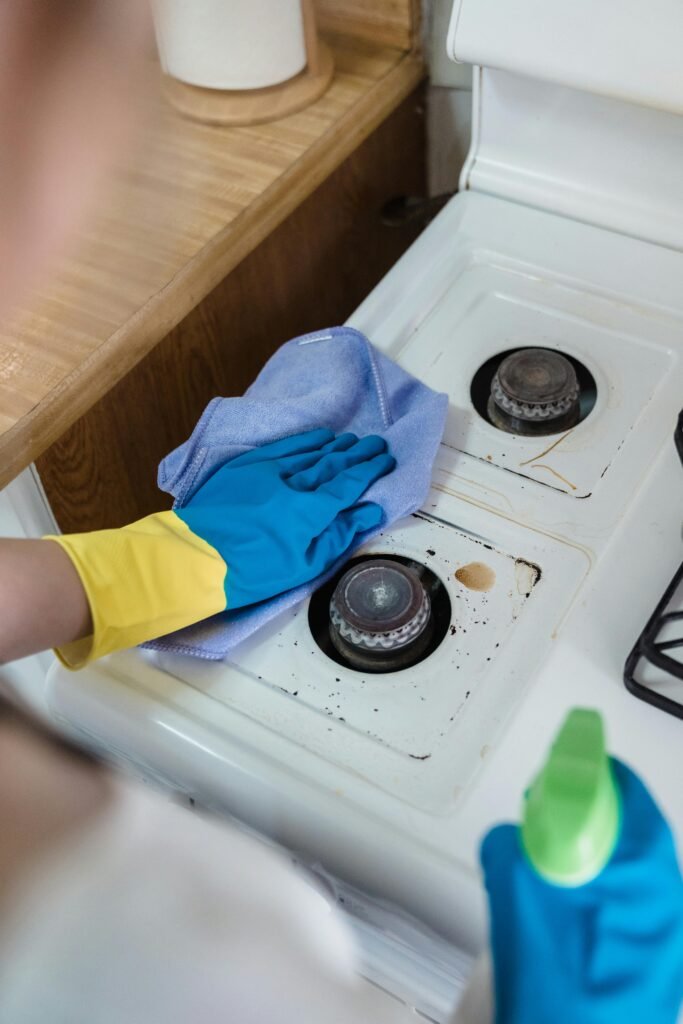
A regular clean keeps on top of everyday dust and grime. A deep clean is a one-off, more thorough clean that reaches the places a regular clean skips. This guide explains the difference, when each one suits, and how to prepare so the cleaners spend their time cleaning rather than tidying.
Reviewed 13 October 2026. General information only.
Regular, one-off and deep cleaning
- Regular cleaning repeats the same everyday tasks (kitchen surfaces, bathrooms, floors, dusting) on a schedule, so dust and grime do not build up.
- A one-off clean is the same kind of clean done once, for example before guests arrive or after a busy period.
- A deep clean goes further: built-up grime in kitchens and bathrooms, skirting boards, door frames, light switches, window tracks and other areas that gather dirt slowly.
- End of lease cleaning is different again: a full checklist for an empty property before you hand back the keys.
When a deep clean makes sense
- Before you start regular cleaning, so the regular visits only need to maintain the home
- After building or renovation work has finished (dust from building work needs particular care; ask about builders cleaning)
- When moving into a home, before your furniture arrives
- When a regular routine has slipped and the build-up is more than a quick clean can deal with
How often a home benefits from a deep clean depends on the household: pets, children, cooking habits and how much regular cleaning is done in between. There is no fixed rule.
How to prepare for a clean
- Put things away. Clear benches, tables and floors so surfaces can be cleaned rather than worked around.
- Put away valuables and fragile items, and anything you would rather not be moved.
- Tell us your priorities. If time is limited, list the rooms or jobs that matter most in the booking form’s instructions.
- Mention delicate surfaces such as natural stone, timber, or anything with a special finish, and any products you want used or avoided.
- Sort out pets so they are comfortable and out of the way, and tell us about them when you book.
- Access, power and water: power and water must be connected; tell us how cleaners get in, and any gate or building codes and parking instructions.
Between cleans
- Wipe kitchen benches and the stovetop after cooking, before grease sets.
- Run the bathroom exhaust fan or open a window during and after showers to reduce moisture.
- Vacuum high-traffic areas between visits.
- Deal with spills straight away; blot carpet spills rather than rubbing them.
What cleaning cannot fix
Cleaning removes dirt and build-up, but it cannot repair damage. Etched or scratched surfaces, stained grout that has discoloured permanently, failed silicone and mould that keeps returning (often a sign of a moisture problem) may need repair or a specialist rather than another clean. Our end of lease checklist, for example, includes mould removal in bathrooms but not ceiling mould.
See deep cleaning for what our deep clean includes and how to book, or call 1300 280 576.
Related: choosing household cleaning products, and using them safely.
Deep cleaning: questions
How long does a deep clean take?
It depends on the size and condition of the home and what you want included. The booking form shows the options and price for your address.
Do I need to be home?
Not necessarily. Tell us how cleaners can get in when you book.
Do the cleaners bring products and equipment?
Yes. If you want particular products used or avoided, say so when you book.